Cheap Labor Is Not a Border Policy: Why the 2026 'Shortage' Panic Shouldn't Buy Amnesty by Another Name
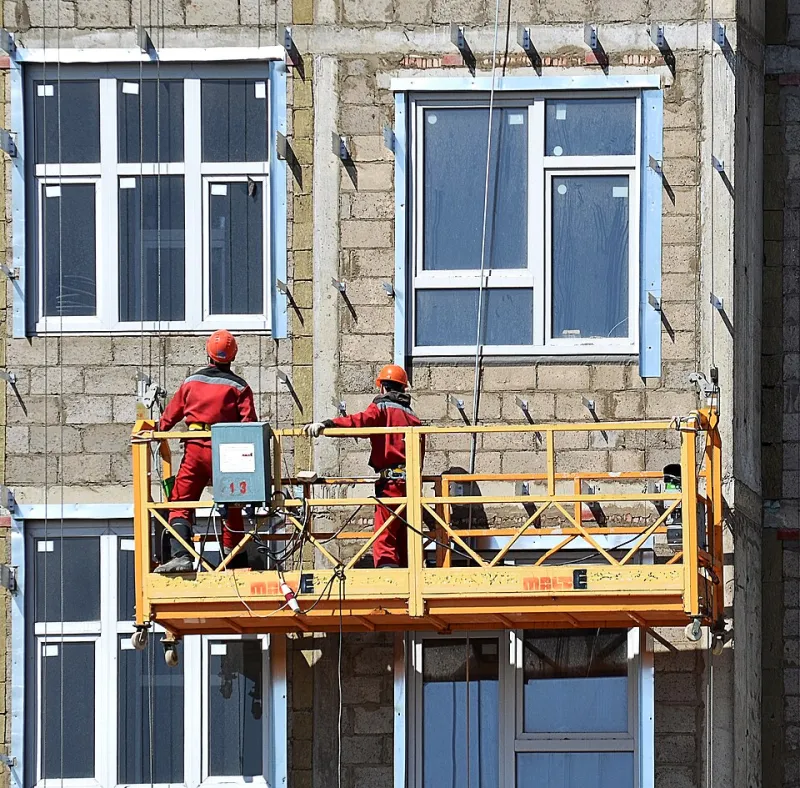
Photo: Dmitry Ivanov., CC BY-SA 3.0, via Wikimedia Commons
There is a version of this argument that gets you invited on television, and a version that gets you accused of wanting lettuce to rot in the field. I am going to write the second one.
The claim, advanced constantly in 2026, is that the American economy cannot function without a substantially larger inflow of foreign labor, and that therefore enforcement must be softened, guest-worker caps raised, and status regularized for people who entered illegally. Each of those may deserve a hearing on its own merits. Bundled together as an emergency, they amount to a wage policy dressed up as an immigration policy, written by the people who benefit from it.
The Shortage Is Real. The Conclusion Isn't.
Construction, meatpacking, dairy, hospitality, elder care and agriculture all report genuine difficulty filling positions. I do not doubt it. But a vacancy is not a moral claim. A vacancy at $16 an hour in a county where a one-bedroom rents for $1,700 tells you something about the wage, not about the supply of Americans. When employers raise pay and improve conditions, as they did across much of 2021 and 2022 in sectors that stopped pretending otherwise, the shortage gets smaller. That is not a coincidence. It is economics, the discipline everyone invokes right up until it produces an inconvenient answer.
Follow the Lobbying Disclosure
The push for expanded H-2A and H-2B visas, for a new agricultural guest-worker stream, and for sweeping work authorization for people already here is not a spontaneous grassroots movement. It is funded by trade associations whose members have a direct financial interest in holding labor costs down. That is their right. It is not a public interest argument, and it should not be laundered into one by a polling memo.
Ask a simple question of any proposal in 2026: if this program were structured so that no employer could pay below the local prevailing wage, how many of its loudest supporters would still be lobbying? The honest answer tells you what the program is actually for.
Both Parties Are Complicit
Conservatives who spent a decade promising border security now find themselves quietly supportive of guest-worker expansion because the donors asked. Expansion without mandatory E-Verify and without exit tracking is not a compromise; it is a subsidy. If an employer can hire an unauthorized worker with no consequence while a lawful guest-worker stream opens beside it, the guest-worker program becomes paperwork decoration and the illegal hiring continues.
Liberals who describe themselves as the party of labor have spent the same decade arguing that enforcement is inherently cruel. It is not. Enforcement against employers who undercut wages is the single most pro-worker act available to the federal government, and it is the one the coalition has been slowest to embrace. A construction crew that loses work to a competitor paying cash under the table is not experiencing abstract policy. It is experiencing a pay cut.
E-Verify Is the Missing Piece
Mandatory E-Verify, phased in for employers above a modest threshold and paired with serious civil penalties and criminal referral for repeat violators, is the least glamorous and most effective enforcement tool on the shelf. It does not require a wall, a raid, or a courtroom. It requires that the law apply to the person signing the paycheck. Florida and a handful of other states have demonstrated that when verification is mandatory and enforced, the labor market adjusts — sometimes painfully, sometimes with higher wages, and almost always with more compliance than critics predicted.
Wages Are the Tell
The pro-expansion argument assumes a fixed quantity of work and a fixed wage. Reality is messier. When labor supply expands faster than demand for housing, the first casualty is the housing market, and the second is the wage floor in the sectors absorbing the inflow. Working-class Americans without credentials have paid that bill for forty years. It is not compassion to keep paying it. It is habit.
What a Serious Deal Looks Like
A durable settlement would include four things, and I would accept them in any order. First, mandatory E-Verify with real penalties. Second, a functioning entry-exit system so that overstays stop being invisible. Third, a capped, market-driven guest-worker program tied to prevailing wage and portable across employers, so that no worker is trapped by a single boss. Fourth, a legalization track for long-settled residents that is bounded, sequential, and not contingent on future enforcement promises that everyone knows will be broken.
Notice what is not on that list: an unchecked border. Enforcement and legal immigration are not opposites. They are the two halves of a system that only works when both are credible. The people most harmed by the current arrangement are not the lobbyists who fund the think pieces. They are the roofer in Ohio whose wage has not moved in a decade and the guest worker in Georgia who cannot leave a bad employer without losing everything.
A country can be generous and lawful at the same time. The 2026 shortage panic is designed to make you believe otherwise, because a nation that believes otherwise is a nation that will keep signing the checks.